
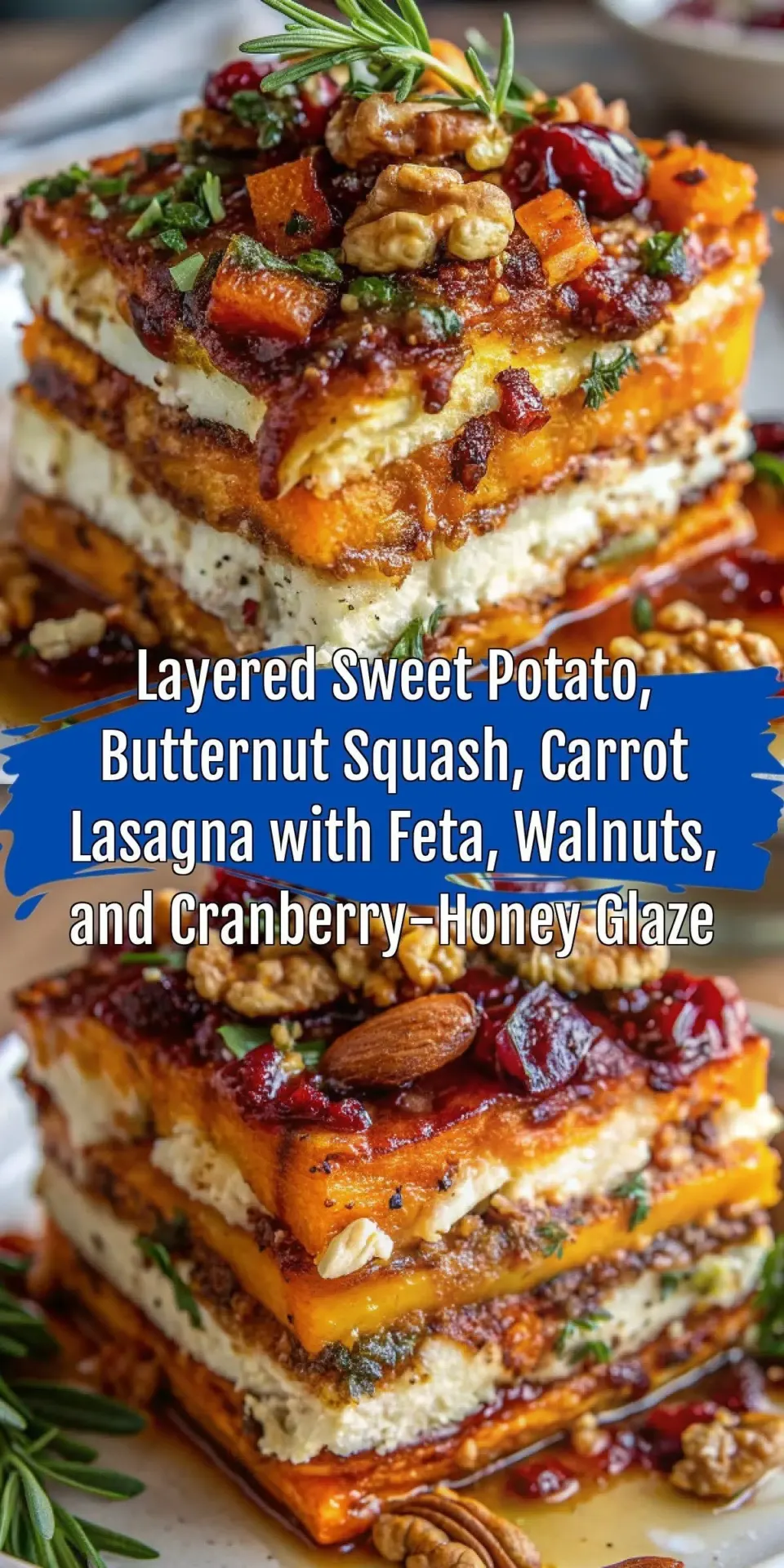
This sweet potato lasagna skips the pasta sheets entirely. Instead, thin rounds of roasted sweet potato, butternut squash, and carrot stack up like tiles, with ricotta and mozzarella holding them together. A handful of cranberries and walnuts on top, plus a quick honey-balsamic glaze, turns it into something you’d happily serve at a holiday table or a weeknight dinner that feels like more.
The layers are soft but not mushy, sweet from the squash and carrots, and rich from the cheese. The cranberries add a tart pop, the walnuts give it crunch, and the honey glaze ties the whole thing together without making it dessert-sweet.
Why this version works
Roasting the vegetables before layering is the move that makes this work. Raw sweet potato slices release too much water as they bake, leaving you with a soupy casserole. A quick roast at high heat concentrates their sweetness and firms them up just enough that they hold their shape when stacked.
The ricotta mixture is simple—egg, Parmesan, sage, nutmeg—but the nutmeg matters. It picks up the sweetness of the squash and keeps the cheese layer from tasting flat. Don’t skip it.
Ingredients
- 2 large sweet potatoes (about 1.5 lbs), peeled and sliced into 1/4-inch rounds
- 1 small butternut squash (about 1 lb), peeled, seeded, and sliced into 1/4-inch half-moons
- 2 large carrots, sliced into 1/4-inch rounds
- 2 tablespoons olive oil, divided
- 1 teaspoon salt, divided
- 1/2 teaspoon black pepper, divided
- 1 cup whole milk ricotta cheese
- 1/2 cup grated Parmesan cheese
- 1 large egg
- 1 teaspoon dried sage
- 1/2 teaspoon nutmeg
- 1 cup shredded mozzarella cheese
- 1/2 cup dried cranberries
- 1/2 cup chopped walnuts
- 2 tablespoons honey
- 1 tablespoon balsamic vinegar
That’s enough for a 9×13-inch dish and about six solid servings. If you’re feeding fewer people, the leftovers reheat well, so don’t scale down unless you have to.
How to layer it
Slice everything about a quarter-inch thick. Thicker than that and the vegetables won’t cook through in time; thinner and they’ll collapse into mush. A mandoline makes this fast, but a sharp knife and a steady hand work fine.
Toss the sweet potato, squash, and carrot with a tablespoon of olive oil, half the salt, and half the pepper. Spread them on a baking sheet and roast at 400°F for 15 minutes. They should be just tender—still holding their shape, not falling apart.
While that’s happening, mix the ricotta, Parmesan, egg, sage, nutmeg, and the rest of the salt and pepper in a bowl. That’s your binder.
Brush the baking dish with the remaining olive oil. Start with a layer of sweet potato rounds, overlapping them slightly. Spread half the ricotta mixture over the top. Add half the squash and carrots, then half the mozzarella. Repeat: sweet potato, ricotta, squash and carrots, mozzarella.
Cover with foil and bake at 400°F for 25 minutes. Uncover and bake another 10 minutes, until the edges are browned and the cheese is bubbly. Let it rest 10 minutes before cutting—this is important, because the layers need time to set or the slices will slide apart.
Topping and variations
While the lasagna bakes, stir together the cranberries, walnuts, honey, and balsamic vinegar. Scatter that over the top right after it comes out of the oven. The heat softens the cranberries slightly and warms the honey so it sinks into the cheese.
Some swaps worth trying:
- Use kale or spinach between layers instead of some of the carrots. Wilt it first so it doesn’t release water.
- Swap the walnuts for pecans or pepitas.
- Add a pinch of red pepper flakes to the ricotta mixture if you want some heat against the sweetness.
- Use smoked mozzarella for a deeper, less sweet flavor.
If you’re making this for a crowd that includes someone who doesn’t do dairy, the ricotta and mozzarella are hard to replace without changing the dish. A cashew-based ricotta works in a pinch, but it won’t brown the same way.
Make-ahead and storage
You can assemble the whole lasagna a day ahead, keep it covered in the fridge, and bake it when you’re ready. Add 10 minutes to the covered baking time since you’re starting from cold. The cranberry-walnut topping is best added after baking, so keep it separate until then.
Leftovers keep in the fridge for about four days. Reheat individual slices in a 350°F oven or a skillet with a lid—microwaving works but makes the vegetables a bit rubbery. You can also freeze the baked lasagna for up to three months. Thaw overnight in the fridge before reheating.
If you’re planning a bigger meatless spread, this casserole pairs well with a simple green salad and crusty bread. It’s also a solid option for a holiday table where you want something hearty that isn’t turkey. For another easy casserole that feeds a crowd, the King Ranch chicken casserole is a good non-vegetarian counterpart. And if you’re in the mood for a breakfast-adjacent bake, the bacon, egg, and cheese sliders are worth a look.
Frequently asked questions
Can I use pre-cut butternut squash from the store?
Yes. Just slice it into quarter-inch half-moons yourself. The pre-cut chunks are usually too thick for layering, so cut them down.
What if I don’t have balsamic vinegar?
Use apple cider vinegar or lemon juice instead. The topping needs that acidic note to cut through the sweet vegetables and honey.
Can I make this without the honey?
Sure. Maple syrup works as a direct swap, or just leave it out entirely and toss the cranberries and walnuts with the balsamic alone. The dish will be less sweet but still good.
How do I know when it’s done?
The edges should be bubbling and browned, and a knife should slide through the center without resistance. If the top is browning too fast but the center isn’t done, cover with foil and give it another 5 minutes.
This is one of those casseroles that looks more complicated than it is. The vegetables do most of the work, the cheese holds it together, and the topping makes it memorable. Slice it warm, let the layers hold, and serve it like you meant to make something special—because you did.