Cheesecake Recipe
Classic cheesecake recipe with a buttery graham crust and tangy cream cheese filling. It bakes up smooth and sliceable, and it is easier than you think.
Cheesecake has a reputation for being fussy. It isn't, if you know two things: use room temperature cream cheese, and don't rush the cool.
I start this at 8am so it can chill all day and be ready after dinner. The whole thing takes about 20 minutes of hands-on work. The oven does the rest.
One note before you begin: a springform pan is the right pan here. A regular cake pan means you can't lift the slices out cleanly.
About the Ingredients
2 cups (200g) graham cracker crumbs
About 14 full sheets, crushed in a bag with a rolling pin. Digestive biscuits or shortbread crumbs work just as well.
6 tablespoons (85g) unsalted butter, melted
Melt it and let it cool for a minute so it doesn't seize when it hits the crumbs. Salted butter is fine; just skip the pinch of salt below.
2 tablespoons (25g) granulated sugar
This goes in the crust only. It helps the base hold together and brown slightly.
1/4 teaspoon fine salt
A small amount balances the sweetness of the whole cake. Skip it if you used salted butter.
4 packages (8oz / 227g each) full-fat cream cheese, room temperature
Full-fat only. Low-fat or whipped cream cheese gives a looser, wetter filling that never sets firm.
1 1/4 cups (250g) granulated sugar
Regular white sugar. Don't swap in brown sugar; it adds moisture and the top browns too fast.
4 large eggs, room temperature
Take them out an hour ahead, or sit them in warm water for 10 minutes. Cold eggs make the batter curdle.
1 cup (240g) full-fat sour cream
This is what makes it tangy instead of flat. Plain whole-milk Greek yogurt is a close substitute.
2 teaspoons vanilla extract
Real extract, not imitation, if you can. A teaspoon of fresh lemon zest is a nice extra here.
Step-by-Step Instructions
1. Heat the oven and prep the pan
Heat the oven to 325F (165C). Lightly grease the bottom and sides of a 9-inch springform pan, then wrap the outside in one layer of foil.
2. Make the crust
Stir the graham crumbs, melted butter, 2 tablespoons sugar, and salt together until it looks like wet sand. Press it firmly into the bottom and about an inch up the sides. Use the flat bottom of a measuring cup to pack it tight.
3. Prebake the crust
Bake the crust for 10 minutes, until it smells toasted and looks set. Take it out and leave the oven on. This step keeps the base from turning soggy under the filling.
4. Beat the cream cheese
In a large bowl, beat the cream cheese alone on medium for 2 minutes, until completely smooth with no lumps. Scrape the bowl down.
5. Add sugar, then eggs
Beat in the 1 1/4 cups sugar, then the sour cream and vanilla. Switch to low speed and add the eggs one at a time, mixing just until each one disappears. Stop there. Overmixing adds air.
6. Bake the cheesecake
Pour the batter over the crust and smooth the top. Bake at 325F (165C) for 50 to 55 minutes. It is done when the outer 2 inches look set and the center still wobbles slightly when you nudge the pan. If you have a thermometer, the center reads about 150F (65C).
7. Cool it slowly
Turn the oven off, prop the door open with a wooden spoon, and leave the cake inside for 1 hour. Then run a thin knife around the edge and set it on a rack to cool to room temperature, about 1 hour more.
8. Chill overnight
Cover the pan and refrigerate for at least 6 hours, ideally overnight. This is when it firms up and the flavor deepens. Release the springform ring before slicing.
Tips & Tricks
- Beat the cream cheese alone first, before the sugar goes in. Two full minutes on medium. Any lumps you leave now will still be there after baking.
- Scrape the bowl twice while mixing. Cream cheese sticks to the sides, and those streaks turn into pockets of unmixed batter.
- Mix on low speed once the eggs go in. High speed whips air into the batter, and air is what makes a cheesecake puff and then crack as it falls.
- Pull it from the oven while the center still wobbles like firm gelatin. It sets as it cools. If it looks fully firm in the oven, it is already overbaked.
Delicious Variations
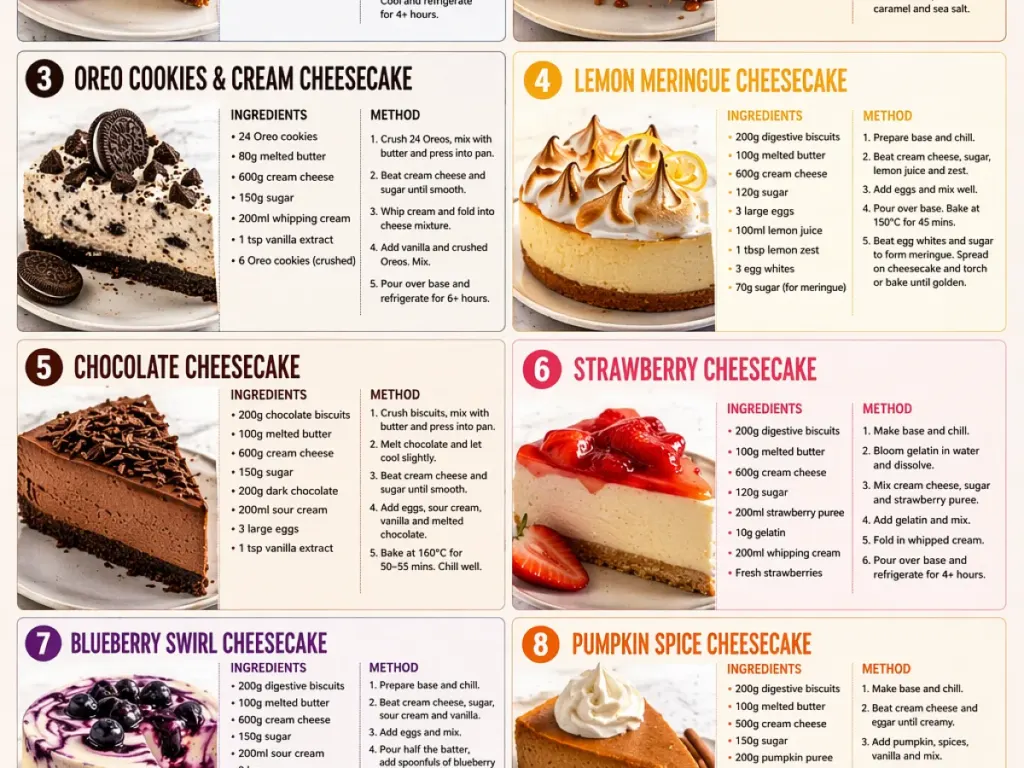
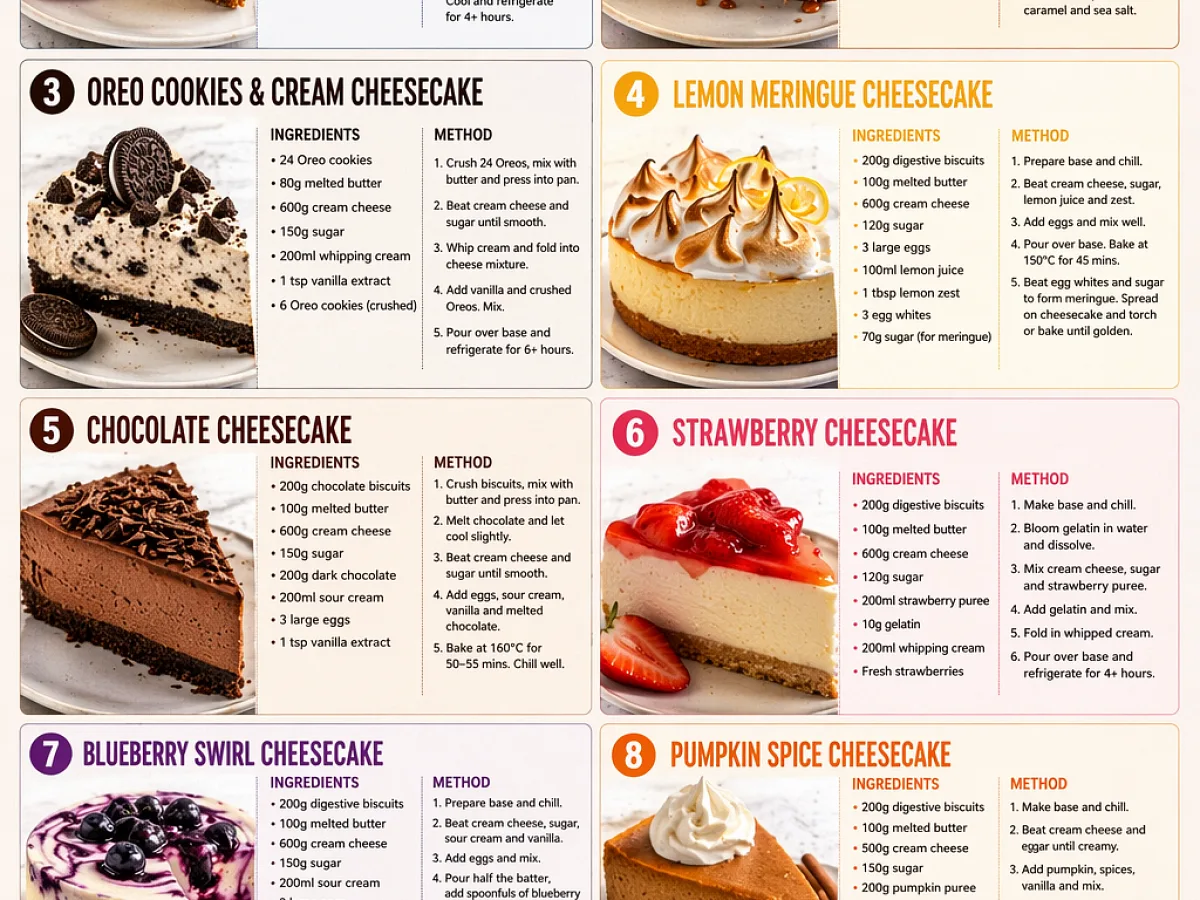
Blueberry swirl
Warm 1 cup of blueberries with 2 tablespoons sugar and 1 teaspoon lemon juice until jammy, cool it, then drop spoonfuls over the batter and drag a knife through it before baking.
Oreo crust
Swap the graham crumbs for 24 crushed Oreo cookies and cut the butter to 4 tablespoons. The filling stays exactly the same.
Chocolate
Melt 6 ounces of dark chocolate, cool it slightly, and fold it into the batter after the eggs. Add 2 extra minutes to the bake time.
How to Store Cheesecake Recipe
Refrigerator
Keep it covered in the pan, or on a plate under a bowl, for up to 4 days. Press plastic wrap right onto the cut surface so it doesn't dry out.
Freezer
Freeze whole or in slices for up to 2 months. Wrap tightly in plastic, then foil. Thaw overnight in the fridge, never on the counter.
Reheating
Don't reheat it. Cheesecake is served cold or at cool room temperature, and warming it turns the filling soft and loose.
Frequently Asked Questions
Q: Why did my cheesecake crack?
Almost always because it cooled too fast or baked too long. Leaving it in the warm oven for an hour with the door propped open stops that. Cracks are only cosmetic, so a fruit topping covers them fine.
Q: Can I make cheesecake without a springform pan?
Yes, but line a regular 9-inch cake pan with a large sheet of parchment so you can lift the whole cake out. A springform pan is still easier, because you release the ring instead of wrestling it free.
Q: How do I know when cheesecake is done?
The outer edge looks set and dry, and the middle two inches still jiggle like firm gelatin when you nudge the pan. It should not look liquid, and it should not look fully firm. Carryover heat finishes the center.
Q: Do I really need a water bath?
No. A 325F oven, room temperature ingredients, and a slow cool get you a smooth top without one. If you want the extra insurance, set the foil-wrapped pan in a roasting pan with an inch of hot water.
Q: Can I use low-fat cream cheese?
It will set softer and taste less rich, and it's more likely to weep. Full-fat blocks give you the firm, sliceable texture people expect from cheesecake. Save the light version for something else.
Make it the day before you need it and the whole thing feels easy. Slice it cold, keep the leftovers covered in the fridge, and you've got dessert sorted for four days. Low and slow, friend.
Classic Cheesecake Recipe – Creamy and Easy
Classic cheesecake recipe with a buttery graham crust and tangy cream cheese filling. It bakes up smooth and sliceable, and it is easier than you think.
🧂 Ingredients
- 2 cups (200g) graham cracker crumbs
- 6 tablespoons (85g) unsalted butter, melted
- 2 tablespoons (25g) granulated sugar
- 1/4 teaspoon fine salt
- 4 packages (8oz / 227g each) full-fat cream cheese, room temperature
- 1 1/4 cups (250g) granulated sugar
- 4 large eggs, room temperature
- 1 cup (240g) full-fat sour cream
- 2 teaspoons vanilla extract
📋 Instructions
- 1Heat the oven and prep the pan — Heat the oven to 325F (165C). Lightly grease the bottom and sides of a 9-inch springform pan, then wrap the outside in one layer of foil.
- 2Make the crust — Stir the graham crumbs, melted butter, 2 tablespoons sugar, and salt together until it looks like wet sand. Press it firmly into the bottom and about an inch up the sides. Use the flat bottom of a measuring cup to pack it tight.
- 3Prebake the crust — Bake the crust for 10 minutes, until it smells toasted and looks set. Take it out and leave the oven on. This step keeps the base from turning soggy under the filling.
- 4Beat the cream cheese — In a large bowl, beat the cream cheese alone on medium for 2 minutes, until completely smooth with no lumps. Scrape the bowl down.
- 5Add sugar, then eggs — Beat in the 1 1/4 cups sugar, then the sour cream and vanilla. Switch to low speed and add the eggs one at a time, mixing just until each one disappears. Stop there. Overmixing adds air.
- 6Bake the cheesecake — Pour the batter over the crust and smooth the top. Bake at 325F (165C) for 50 to 55 minutes. It is done when the outer 2 inches look set and the center still wobbles slightly when you nudge the pan. If you have a thermometer, the center reads about 150F (65C).
- 7Cool it slowly — Turn the oven off, prop the door open with a wooden spoon, and leave the cake inside for 1 hour. Then run a thin knife around the edge and set it on a rack to cool to room temperature, about 1 hour more.
- 8Chill overnight — Cover the pan and refrigerate for at least 6 hours, ideally overnight. This is when it firms up and the flavor deepens. Release the springform ring before slicing.