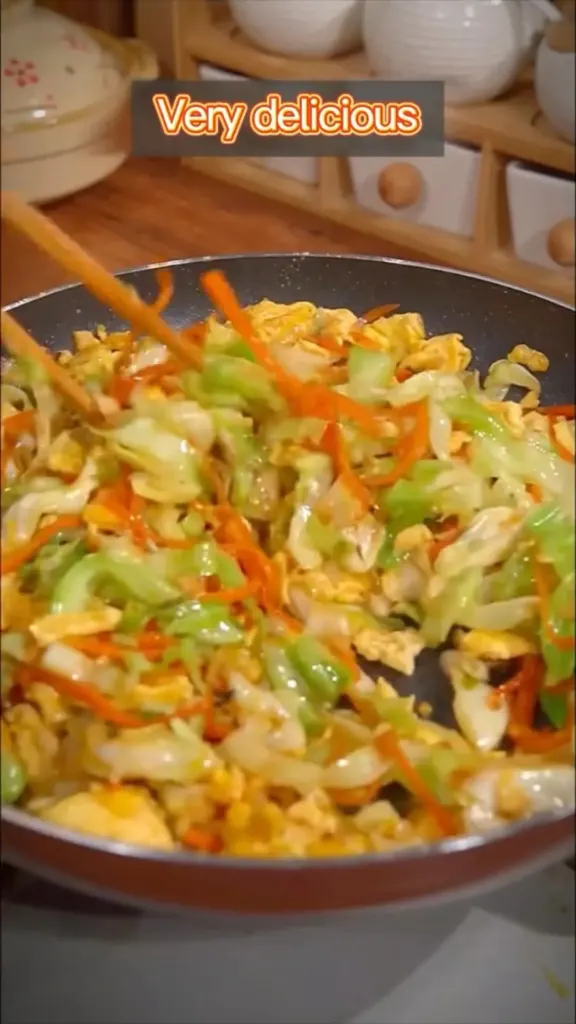
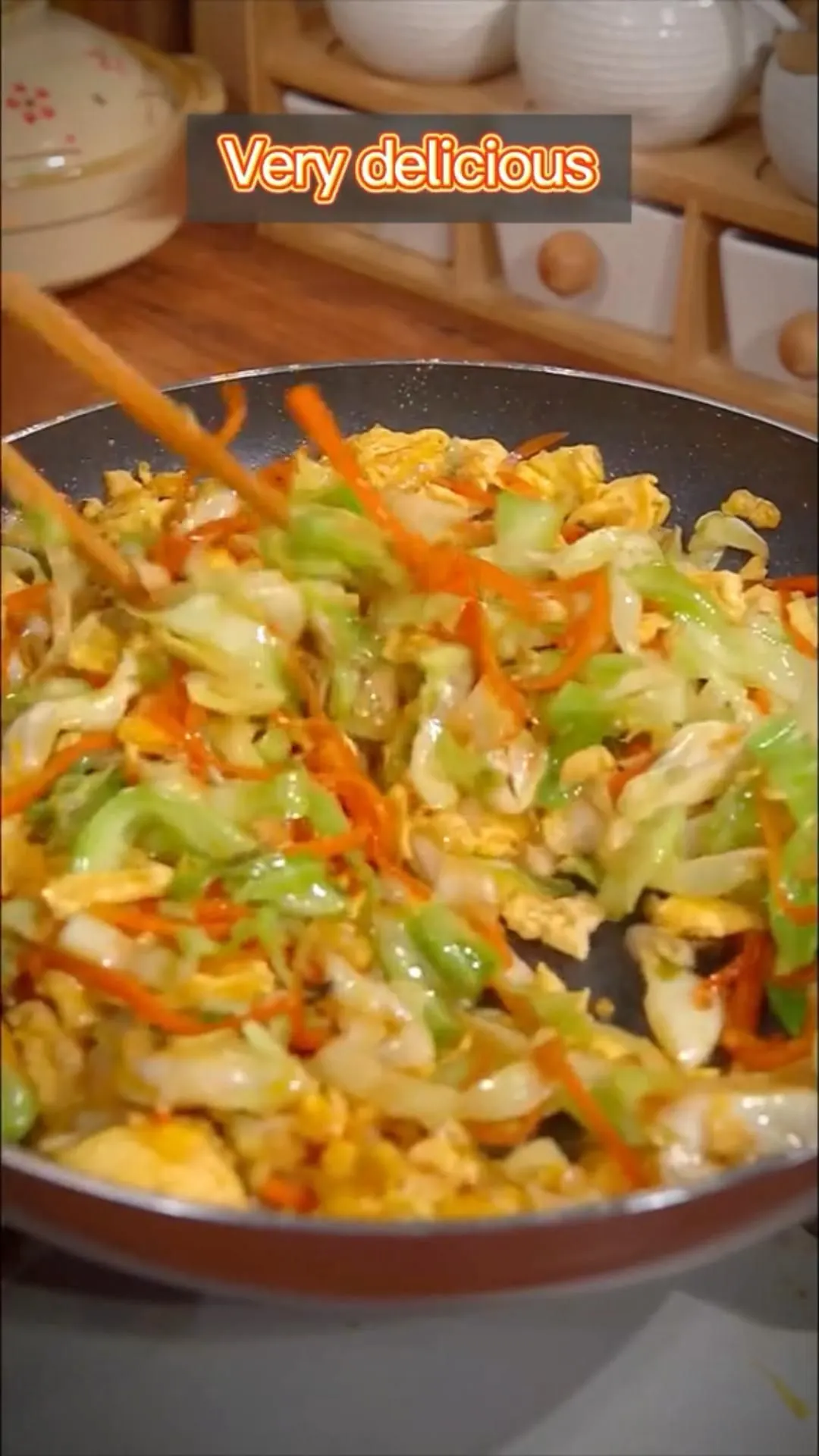
This vegetable stir-fry is the dinner you make when you want something hot, savory, and on the table before delivery would even arrive. It’s cabbage, carrots, and scallions tossed in a glossy sauce that clings to every piece. Twenty minutes, one pan, and it tastes like a proper takeout dish without leaving the house.
The trick is heat. A screaming-hot wok or skillet gives the vegetables that slight char and keeps them crisp instead of steamed and soggy. You don’t need a wok—a large stainless steel or cast-iron skillet works fine. Just don’t crowd the pan, and don’t stir constantly. Let the vegetables sit for a few seconds between tosses.
What makes this stir-fry work
The sauce does the heavy lifting. Soy sauce brings salt and umami, oyster sauce adds sweetness and body, and a splash of sesame oil gives that unmistakable toasted aroma. A little cornstarch slurry thickens everything so it coats the vegetables rather than pooling at the bottom of the bowl.
Cabbage is the backbone here. It’s cheap, holds up to high heat, and shrinks down enough that a whole head becomes a reasonable amount for four people. Carrots add color and a slight sweetness. Scallions give a fresh bite at the end.
Ingredients for easy vegetable stir-fry
- 2 tablespoons vegetable oil (or any neutral oil with a high smoke point)
- 4 cups green cabbage, thinly sliced
- 2 large carrots, julienned or thinly sliced
- 4 scallions, cut into 2-inch pieces
- 3 cloves garlic, minced
- 1 tablespoon fresh ginger, grated
- 3 tablespoons soy sauce
- 1 tablespoon oyster sauce (or hoisin for a vegetarian version)
- 1 teaspoon sesame oil
- 1 teaspoon cornstarch mixed with 2 tablespoons water
- 1 teaspoon sugar (optional, balances the salt)
- Cooked rice or noodles, for serving
Prep everything before you turn on the heat. Stir-frying moves fast, and you won’t have time to chop once the pan is hot. Slice the cabbage into thin ribbons, cut the carrots into matchsticks or thin rounds, and have the garlic and ginger ready in a small bowl.
How to cook it, step by step
Heat the oil in your wok or skillet over high heat until it shimmers—almost smoking. Add the cabbage and carrots. Let them sit for about 30 seconds before you start tossing. This builds a little char without steaming the vegetables.
Stir-fry for 3 to 4 minutes. The cabbage should soften but still have crunch. If your pan is too hot, the edges of the cabbage will curl and brown faster than the centers cook. That’s fine—a little char is flavor. If the pan looks dry, add a splash of water or a bit more oil.
Add the scallions, garlic, and ginger. Stir-fry for 1 minute until fragrant. Garlic burns quickly, so keep it moving.
Whisk the soy sauce, oyster sauce, sesame oil, sugar, and cornstarch slurry in a small bowl. Pour it over the vegetables. Toss constantly for 1 to 2 minutes. The sauce will thicken and turn glossy as it coats everything. Serve immediately over rice or noodles.
Tips and variations
This recipe is more of a template than a rule. Swap cabbage for broccoli, bell peppers, snap peas, or bok choy. Just adjust cooking times—broccoli needs a few extra minutes, snap peas need fewer. Keep the total vegetable volume around 6 cups.
Add protein if you want a fuller meal. Sliced chicken, beef, or tofu can be stir-fried first, removed from the pan, then added back at the end with the sauce. Shrimp works too—just cook it for 2 minutes per side before pulling it out.
For extra heat, add a teaspoon of chili garlic sauce or red pepper flakes with the garlic. For a thicker sauce, add a bit more cornstarch slurry. For a thinner one, skip the slurry entirely.
Don’t skip the sesame oil. It’s the flavor that makes this taste like takeout. But add it at the end, not at the start—it can turn bitter if it gets too hot.
If you’re looking for another easy weeknight option, the High-Protein Sheet Pan Chicken and Vegetables is a solid no-fuss alternative. And if you want something with more protein built in, King Ranch Chicken Casserole is a hearty one-dish dinner.
Storage and make-ahead notes
This stir-fry is best eaten right away. The vegetables lose their crunch as they sit in the sauce. If you have leftovers, store them in an airtight container in the fridge for up to 3 days. Reheat in a hot skillet for a minute or two, not in the microwave—it’ll turn the vegetables mushy.
You can prep the vegetables a day ahead. Slice the cabbage and carrots, store them in a sealed bag in the fridge, and they’ll be ready when you are. The sauce can also be mixed ahead and kept in a jar for up to a week.
If you’re meal-prepping, keep the sauce separate from the vegetables until you’re ready to eat. That way, nothing gets soggy.
Frequently asked questions
Can I use frozen vegetables?
Yes, but they’ll release water as they cook, which makes it harder to get that charred, wok-hei flavor. Skip the defrosting step and add them frozen, then cook a minute or two longer. The sauce will be a bit thinner.
What if I don’t have oyster sauce?
Hoisin sauce works as a substitute and keeps it vegetarian. You can also use a splash of teriyaki sauce or just add a teaspoon of sugar to the soy sauce.
Is this stir-fry gluten-free?
Use tamari or coconut aminos instead of soy sauce, and skip the oyster sauce (or use a gluten-free version). Everything else is naturally gluten-free.