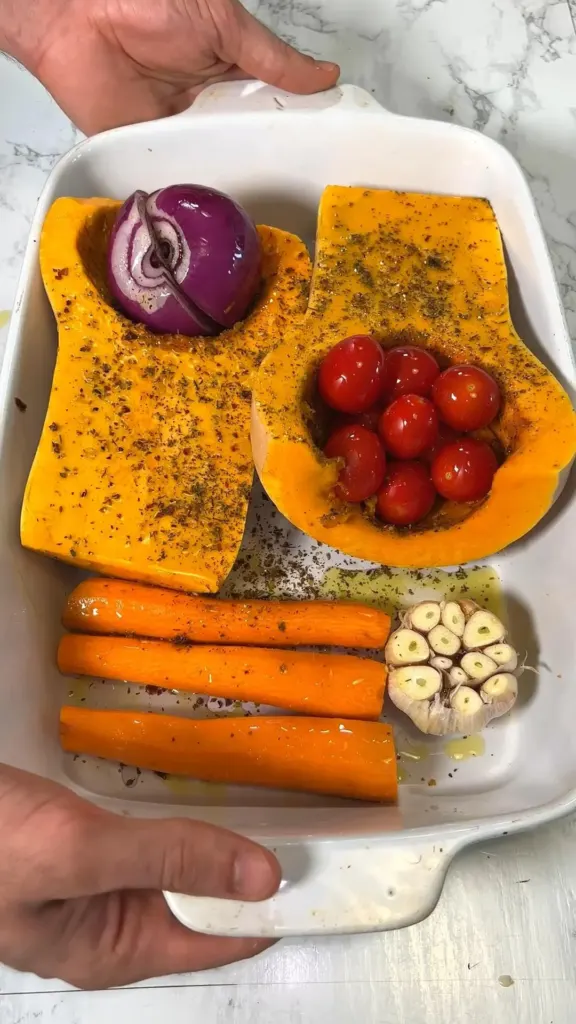
This roasted butternut squash soup gets its deep, sweet flavor from a hot oven, not from added sugar. The squash, carrots, cherry tomatoes, and onion all caramelize together in one pan, which means the soup builds layers of flavor while you do almost nothing.
It’s plant-based, creamy without any dairy, and comes together in about 55 minutes from start to finish. Most of that time is hands-off roasting.
What makes this version work
Roasting is the whole trick here. When butternut squash cooks at 425°F (220°C), its natural sugars concentrate and the edges turn golden and sticky. That caramelization is what gives the soup its nutty, almost sweet depth.
The cherry tomatoes might seem like an odd addition, but they’re not there for show. They break down during roasting and add a gentle acidity that keeps the soup from tasting flat or overly sweet. The red onion does something similar—it roasts into something mild and jammy, not sharp.
You also get a bonus: the garlic cloves soften and mellow as they roast, so you don’t get that raw, pungent bite that can ruin a blended soup.
Roasted butternut squash soup ingredients
Here’s the full list. Most of it is probably already in your kitchen.
- 1 medium butternut squash (about 2 lbs), halved and seeded
- 2 carrots, chopped into 1-inch pieces
- 1 red onion, cut into wedges
- 1 cup cherry tomatoes
- 4 cloves garlic, peeled
- 2 tablespoons olive oil
- 1 teaspoon smoked paprika
- 1/2 teaspoon ground cumin
- 1/2 teaspoon dried thyme
- 1/2 teaspoon salt, plus more to taste
- 1/4 teaspoon black pepper
- 3 cups vegetable broth
- 1/2 cup canned coconut milk (or heavy cream, if you’re not keeping it vegan)
The smoked paprika is worth seeking out. Regular paprika works, but the smoked kind gives the soup a subtle warmth that pairs beautifully with the sweet squash. If you only have sweet paprika, add a pinch of cayenne to make up for the missing heat.
How to roast the vegetables
Preheat your oven to 425°F (220°C).
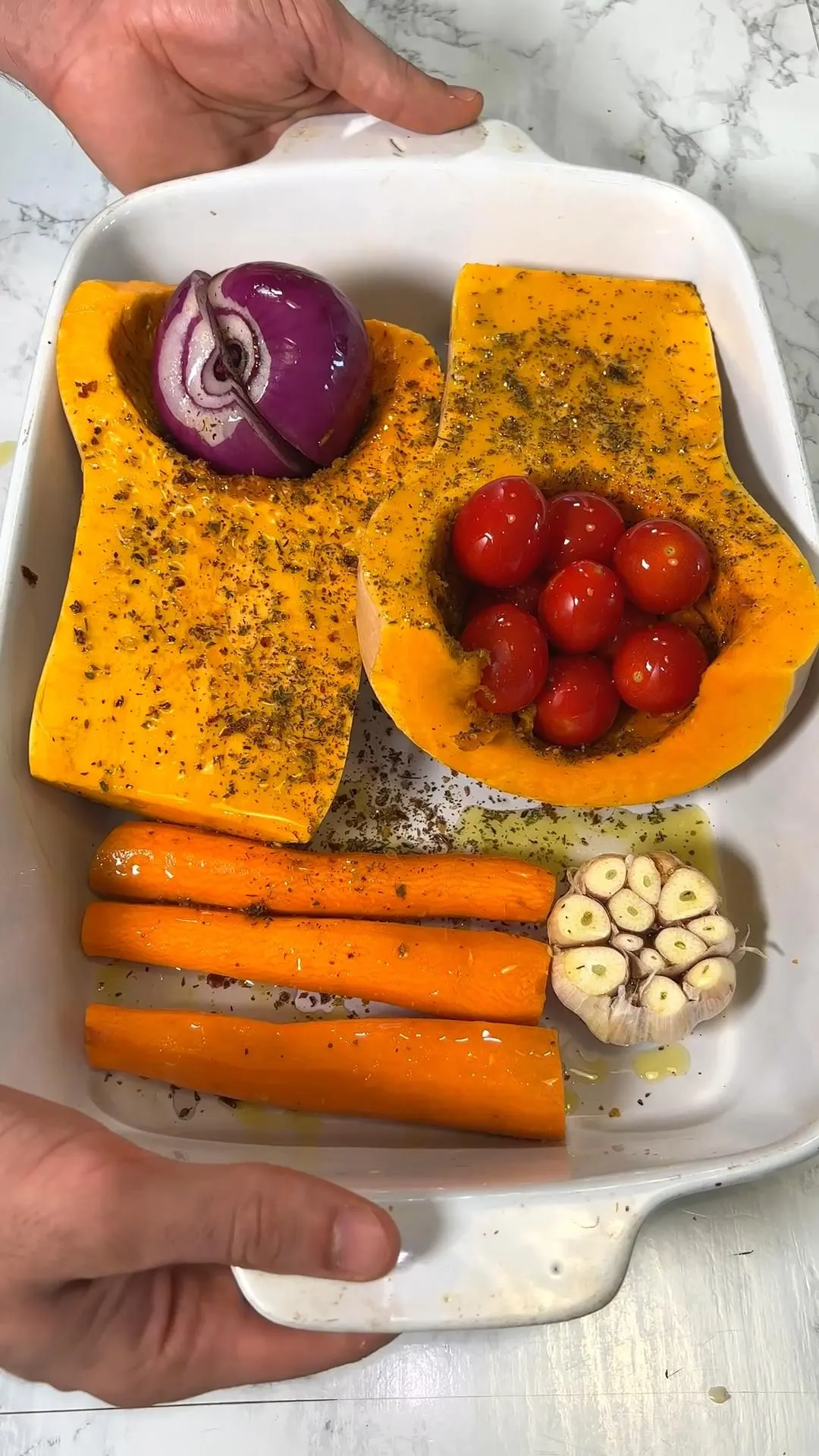
Place the squash halves cut-side up in a large baking dish. Scatter the carrots, red onion, cherry tomatoes, and garlic cloves around them. Drizzle everything with the olive oil and sprinkle over the smoked paprika, cumin, thyme, salt, and pepper. Toss the loose vegetables to coat them evenly, but leave the squash where it is.
Roast for 40 to 45 minutes. You’ll know it’s done when a fork slides easily into the thickest part of the squash and the onion edges have started to brown and caramelize. The tomatoes will look collapsed and a little wrinkled—that’s exactly what you want.
Let everything cool for about 5 minutes before handling. The squash holds heat for a while, and it’s much easier to scoop when it’s not steaming.
Blending and finishing the soup
Scoop the roasted squash flesh out of the skin and into a blender. Add the roasted carrots, onion, tomatoes, garlic, and any juices from the baking dish. Pour in the vegetable broth.
Start the blender on low and gradually increase the speed. Hot liquids expand and splatter, so hold the lid down with a folded towel and never fill the blender more than two-thirds full. If your blender is small, work in batches.
Blend until completely smooth—about 60 seconds. The soup should look glossy and have a velvety texture. If it’s thicker than you like, add another splash of broth.
Pour the blended soup into a pot, stir in the coconut milk, and warm it over medium heat for about 5 minutes. Taste it. You’ll almost certainly want a little more salt than you think. Season generously and finish with black pepper.
Tips and easy swaps
This recipe is forgiving, so feel free to adjust based on what you have.
- No cherry tomatoes? Use one chopped regular tomato or a tablespoon of tomato paste stirred into the broth. The acidity matters more than the specific form.
- Swap the coconut milk for heavy cream, half-and-half, or even plain Greek yogurt stirred in at the end. Each changes the richness slightly, but all work.
- Add a peeled apple to the roasting pan for extra sweetness and a slightly different flavor profile. A Honeycrisp or Fuji works well.
- For more heat, add a pinch of red pepper flakes with the other spices, or a small chopped chili to the roasting pan.
- If you’re short on time, skip the roasting and simmer the raw vegetables in broth for 25 minutes. It’s a different soup—lighter and less sweet—but still good.
For a heartier meal, this soup pairs well with a side of crusty bread or a simple green salad. If you’re planning a full fall dinner, it also works as a starter alongside a creamy chicken and rice casserole or a French onion chicken orzo casserole.
Make-ahead and storage notes
This soup keeps well for 4 to 5 days in an airtight container in the fridge. The flavor actually deepens overnight as the spices settle.
It also freezes beautifully. Let it cool completely, then transfer to freezer-safe containers or zip-top bags. Leave about an inch of headroom because the liquid expands as it freezes. It will keep for up to 3 months.
To reheat from frozen, thaw in the fridge overnight and warm gently on the stovetop. If it looks separated after reheating, a quick whisk or a few seconds in the blender will bring it back together.
For a protein boost, stir in a can of drained white beans before blending. They disappear into the soup and make it more substantial without changing the flavor much.
If you’re looking for another easy weeknight meal with a similar roasted-vegetable approach, the high-protein sheet pan chicken and vegetables follows the same one-pan logic.
Frequently asked questions
Can I use pre-cut butternut squash?
Yes. Buy a bag of pre-cut cubes and roast them on a sheet pan with the other vegetables. Reduce the roasting time to about 30 minutes and check for tenderness with a fork.
Do I have to peel the butternut squash first?
No. Roasting the squash in halves with the skin on is the easiest method. The skin softens during roasting, and you scoop the flesh out afterward. Peeling a raw butternut squash is fiddly and unnecessary here.
What can I use instead of coconut milk?
Heavy cream, half-and-half, or plain unsweetened oat milk all work. For a lighter soup, skip the creamy element entirely and add a little extra broth.
This soup is at its best on a cold evening, served hot with something crusty on the side. It’s simple enough for a weeknight and good enough to feel like a treat.